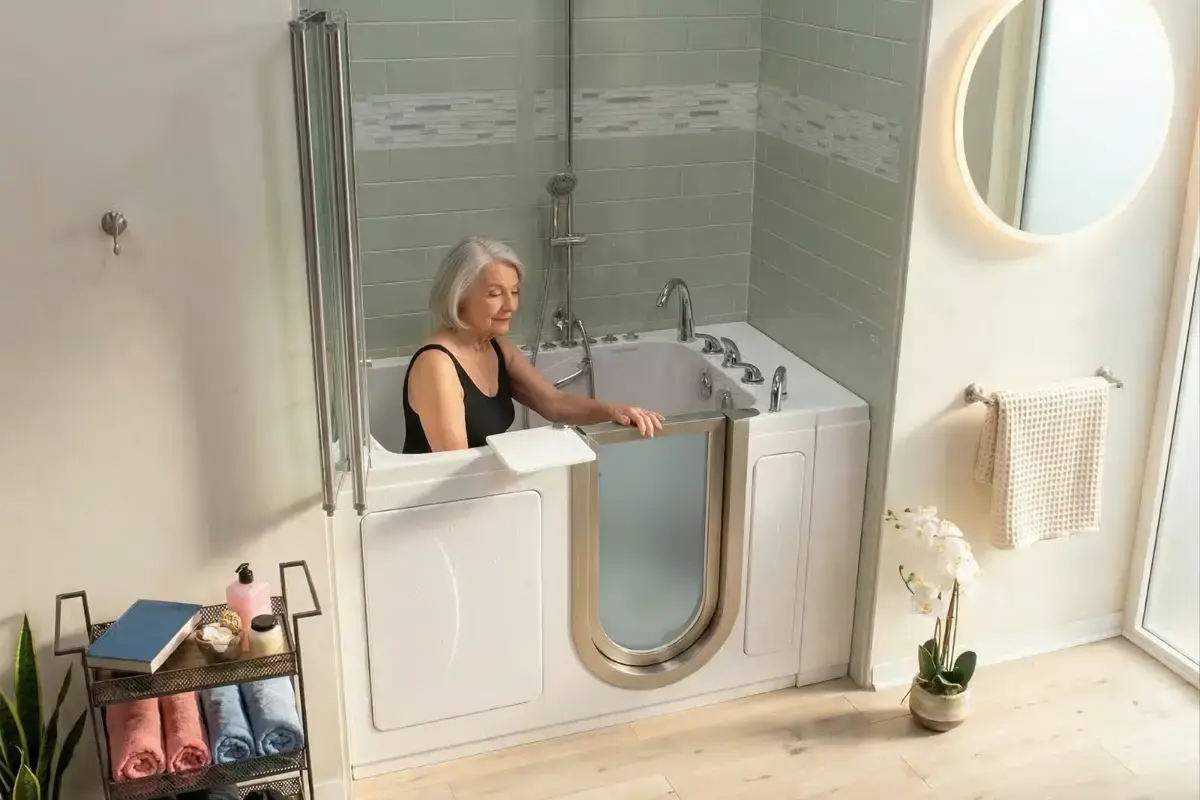
Made in USA vs imported walk-in tubs: how to compare them fairly
Direct answer: A U.S.-made walk-in tub tells you where it was built and, with an unqualified label, that nearly all of it is domestic. It doesn't by itself prove better quality. Compare both tubs on the same checklist: door and seal standard, certification listings, warranty terms, where parts ship from, the installer and how well the tub fits you.
It's one of the most common questions buyers ask: "Is the American-made one worth it?" It's a fair question with a less tidy answer than either side of the argument usually admits. Origin is real information. It just isn't the only information, and it shouldn't stand in for the checks that tell you whether a particular tub is any good for you.
What origin actually tells you
Under the FTC's standard, an unqualified "Made in USA" claim means all or virtually all of the product, including significant parts and processing, is domestic, with final assembly in the U.S. (we explain the rule in detail in our guide to Made in USA label rules). An imported tub must carry a country-of-origin mark under customs law, which we cover in reading country-of-origin marks. So between the two labels, you know where it was made. That can matter for reasons that have nothing to do with quality: supporting domestic manufacturing, preferring a maker you can hold accountable here, or a shorter path for parts.
What origin doesn't tell you: how well the door seals after years of use, whether the pump is quiet, whether the seat height suits your hips, how the tub is listed for safety, or whether anyone will answer the phone in year nine. Those come from the checklist below.
The side-by-side checklist
Run both tubs, domestic and imported, through the same rows. Get each answer from the maker's own documents or in writing from the dealer.
| What to compare | Where to find it | Why it matters |
|---|---|---|
| Exact origin wording | Maker's website or spec sheet; the label on the tub | "Made," "assembled" and "designed" mean different things |
| Door standard | Spec sheet or listing: ASME A112.19.15 covers bathtubs with pressure-sealed doors | The door and seal are what make a walk-in tub a walk-in tub |
| Plumbing and electrical listings | Spec sheet; listing marks on the tub and its electrical components | Inspectors and installers look for listed products; jetted and heated tubs have electrical parts |
| Shell material | Spec sheet (acrylic, gelcoat fiberglass and other builds) | Affects feel, repairability and how the finish wears |
| Warranty, part by part | The full warranty document for your model | Shell, seal, pump, heater and valve often have different terms |
| Parts path | Ask: where are seals and pumps stocked, and how long do they take? | A great tub with a three-month wait for a seal is a problem |
| Standard vs proprietary parts | Ask whether the faucet, drain and valve are common plumbing parts | Common parts mean a local plumber can help |
| Fit to your body | Step-in height, seat height, door swing, interior width | The best-made tub is the wrong tub if you can't get in comfortably |
| Installer and workmanship terms | The quote and invoice | Many leaks are installation problems, covered by the installer, not the maker |
Where a domestic factory can help
We'll be specific and careful here, because these are possibilities, not promises:
- Shorter shipping for parts. A U.S. plant can mean a seal or a door part ships from a domestic warehouse rather than overseas. Ask where parts are actually stocked; some importers keep U.S. inventory too.
- A maker you can reach. A factory in your time zone with a published claims address is easier to deal with. Check that the warranty names an address and a process.
- Clear accountability for the label. A maker making an unqualified U.S. claim has to be able to back it up under FTC rules.
- Federal and institutional buyers. If you're buying for a federal facility, domestic manufacture matters under Buy American. See our Buy American and VA guide.
Where an imported tub can be a sound choice
Plenty of imported tubs are well made and well supported, especially when they're listed to the relevant standards, sold through an established dealer and backed by a U.S. distributor with parts on hand. If an imported model fits your body and bathroom better, has a clear warranty and a parts path you can verify, it can be the right choice. What we'd steer you away from is any tub, from anywhere, where nobody can tell you who made it, where parts come from or who honors the warranty.
A fair way to compare two quotes
- Make sure both quotes name the maker, the exact model and where it's built.
- Line up the options: same door style, same therapy features, same installation scope.
- Put the warranty documents side by side and compare the shell, seal, pump and heater terms.
- Ask both dealers the parts question and write down the answers.
- Only then compare price. A lower number with less included isn't a lower price.
Our dealer question checklist turns this into a printable list. When you're ready to see American-made models with sizes and door styles, Aging Safely Baths lists the American-made walk-in tubs it installs and who builds them.
Sources
- Federal Trade Commission, Complying with the Made in USA Standard
- eCFR, 16 CFR Part 323, Made in USA Labeling Rule
- ASME A112.19.15, Bathtubs/Whirlpool Bathtubs with Pressure Sealed Doors (title and scope)
- Federal Acquisition Regulation, Part 25, Foreign Acquisition
Common questions
Are Made in USA walk-in tubs better than imported ones?
Not automatically. An unqualified U.S. label tells you nearly all of the tub was made here, which many buyers value. Quality shows up elsewhere: the door and seal design, the standards the tub is listed to, the warranty terms, how quickly parts arrive and how well it's installed. Compare a domestic and an imported tub on the same checklist and let fit and support decide when origin is a tie.
Do imported walk-in tubs have to say where they were made?
Yes. Imported goods generally must be marked with their country of origin under U.S. customs law, in a conspicuous place and in English, so the end buyer can see it. The mark may be on the tub, its packaging or its documents depending on the item. If you can't find it, ask the dealer for the country of origin in writing.
Is it easier to get parts for an American-made walk-in tub?
It can be, because parts may ship from a domestic plant, but it isn't guaranteed. Some importers stock parts in U.S. warehouses, and some domestic makers have slow parts departments. Ask every dealer the same question: where are door seals and pumps for this model stocked, and how long does a typical order take? Write the answers on the quote.
What standard should a walk-in tub door meet?
Look for the tub to be listed to ASME A112.19.15, the standard for bathtubs with pressure-sealed doors. Its scope covers materials, testing and marking, and doors that open when the tub is empty and stay watertight when it's full. Ask the dealer to show the listing on the spec sheet or the tub label, whether the tub is domestic or imported.
Does a U.S.-made tub cost more to install?
Installation cost depends on your bathroom, not the tub's origin: removing the old tub, plumbing changes, the water heater, electrical work for jets or heaters, and any wall or floor repair. Two tubs of similar size and features usually install in a similar way. Compare itemized quotes so the installation lines are visible and you can see where any difference comes from.
How do I know a Made in USA claim is real?
Check the exact wording on the maker's own website and spec sheet, and ask the dealer for it in writing. An unqualified claim should match the FTC's all-or-virtually-all standard; qualified wording like "assembled in USA" means something narrower. If a claim looks wrong, you can report it to the FTC at ReportFraud.ftc.gov. Our manufacturer list quotes each maker's statement with the date we checked.
Want two tubs compared on paper?
Leave your name, phone and ZIP and Aging Safely Baths, the walk-in tub dealer and installer that publishes this site, will call you back with American-made options for your bathroom. No obligation.
Prefer to browse first? Ask Aging Safely Baths these questions or call 1-888-779-2284.